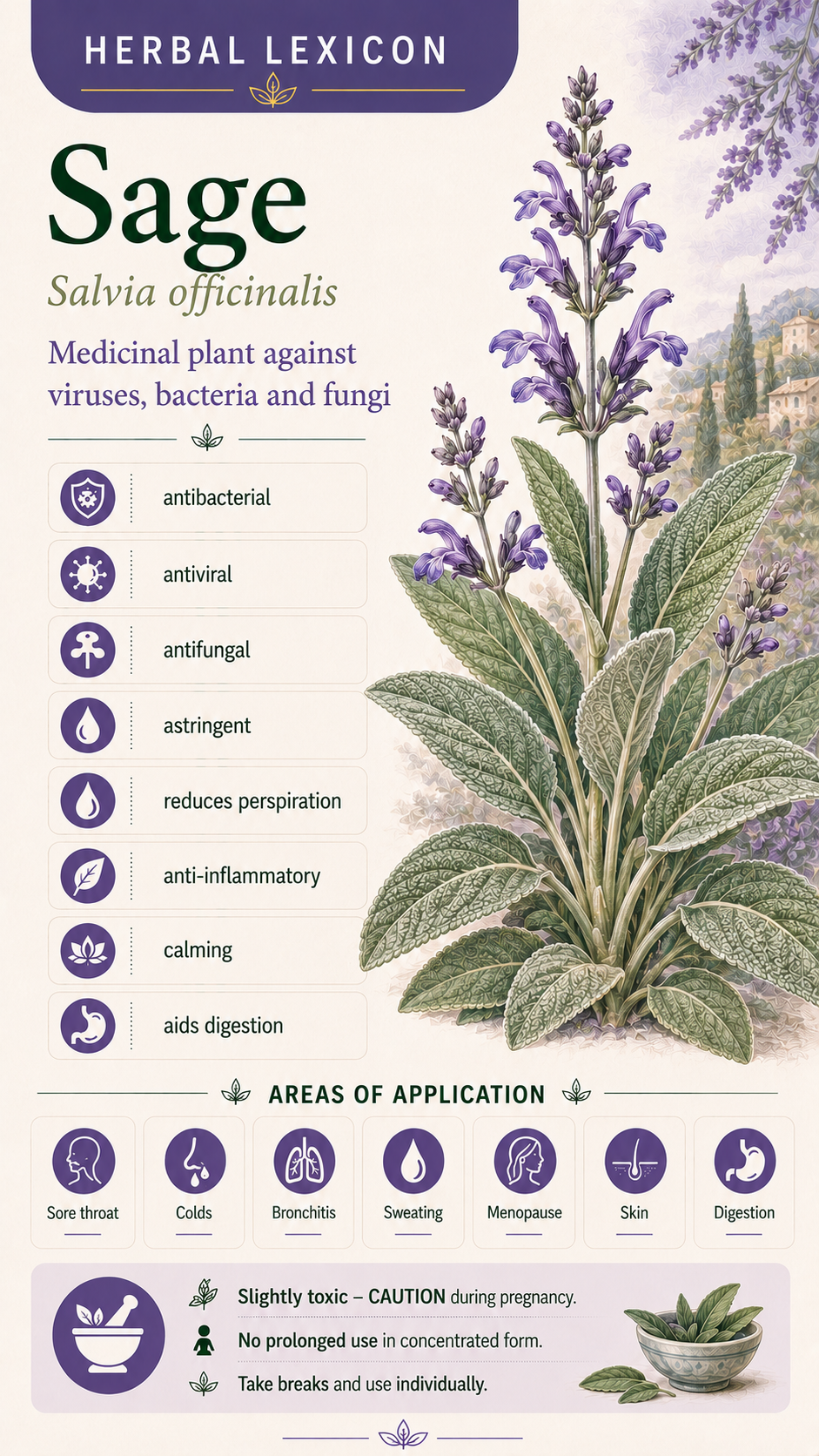

Salvia = to heal/save – the monastic herb effective against viruses, bacteria, and fungi alike. The basis of medieval elixirs. Not intended for long-term use in concentrated form!
Interesting facts about sage
- Related to cinnamon and wormwood (thujone family).
- Anti-cancer: Flavonoids and phenolic acids have antiproliferative effects.
- A collection of medieval folk remedies.
Effects & Properties
Thujone: soothing, antiperspirant, antimicrobial (neurotoxic in case of overdose). Cineol/Linalool: antibacterial, antiviral, antifungal. tannins: astringent, reduces swelling of the mucous membranes. bitter compounds: Supports liver and gallbladder function.
Features: antibacterial, antiviral, antifungal, astringent, antiperspirant, anti-inflammatory, digestive.
Applications
Sage for mouth and throat infections
Sage combines three complementary mechanisms for treating sore throats: cineol kills bacteria and viruses (antiseptic), tannins constrict swollen mucous membranes (astringent), and thujone has a mild analgesic effect. When used as a warm gargle with tea or concentrated tincture several times a day, sage significantly relieves sore throats and speeds up healing.
Sage for colds
During a cold, viruses and bacteria infect the nasopharyngeal area. Cineol and linalool, found in sage oil, directly combat these pathogens, inhibit excessive mucus production, and make it easier to cough up mucus. The astringent effect of the tannins helps reduce swelling in the inflamed mucous membranes.
Sage for Bronchitis
Bronchitis is characterized by inflammation of the bronchial tubes and excessive mucus production. Sage constricts the bronchial vessels due to its astringent effect, reduces swelling of the mucous membranes, and acts as an antiseptic against bronchial infections. This helps clear the airways and makes the cough more productive.
Salvia for skin conditions
Inflammatory skin conditions characterized by redness, itching, and swelling respond well to sage. The tannins constrict the inflamed blood vessels, reducing itching and redness. When used topically as a compress or wash, sage also acts as an antiseptic against skin bacteria.
Sage for menstrual cramps
Sage has a dual effect on menstrual cramps: its astringent properties reduce heavy bleeding by constricting blood vessels. Its anti-inflammatory compounds relieve pain and soothe inflamed uterine tissue.
Salvia for Sweating and Menopause
Excessive sweating and menopausal hot flashes are caused by overactive sweat glands responding to hormonal signals. Sage has an astringent effect: it constricts blood vessels, reducing blood flow to the sweat glands and thereby reducing their activity. Clinical studies confirm the effectiveness of sage extracts in treating hyperhidrosis and menopausal symptoms.
Sage for Digestive Problems
Thanks to its bitter compounds, sage stimulates bile flow and, due to its antimicrobial properties, helps combat dysbiosis in the gut. This improves digestion and reduces bloating and indigestion.
Instructions for Use
Temporary. No recurring revenue in concentrated form (thujone accumulates and is neurotoxic).
Pregnancy & Breastfeeding
Caution: Thujone can trigger premature labor (during pregnancy) and inhibit milk production (while breastfeeding). It is safe in culinary amounts, but avoid tea and tinctures.
Plant Profile
- Scientific name: Salvia officinalis
- Plant family: Lamiaceae
- Other names: Kitchen sage
- Flowering period: June through August
- Origin: Mediterranean region
- Toxicity: Mildly toxic (thujone)