

Echinacea is most effective in the spring and fall—during seasonal transitions, it strengthens the immune system and has been shown to shorten the duration of colds.
Interesting facts about echinacea
From North America to German gardens—Echinacea has an impressive history.
- The fresh leaves of echinacea are delicious in salads.
- Widespread in Germany since the 18th century.
- Even the Native Americans in North America used it to treat colds.
Effects & Properties
cichoric acid inhibits the enzyme hyaluronidase – pathogens have difficulty spreading in the tissue. Alkylamides They directly activate phagocytes (macrophages). Polysaccharides increase the number of white blood cells in the blood. Vitamin C acts as a free radical scavenger and protects cells from damage.
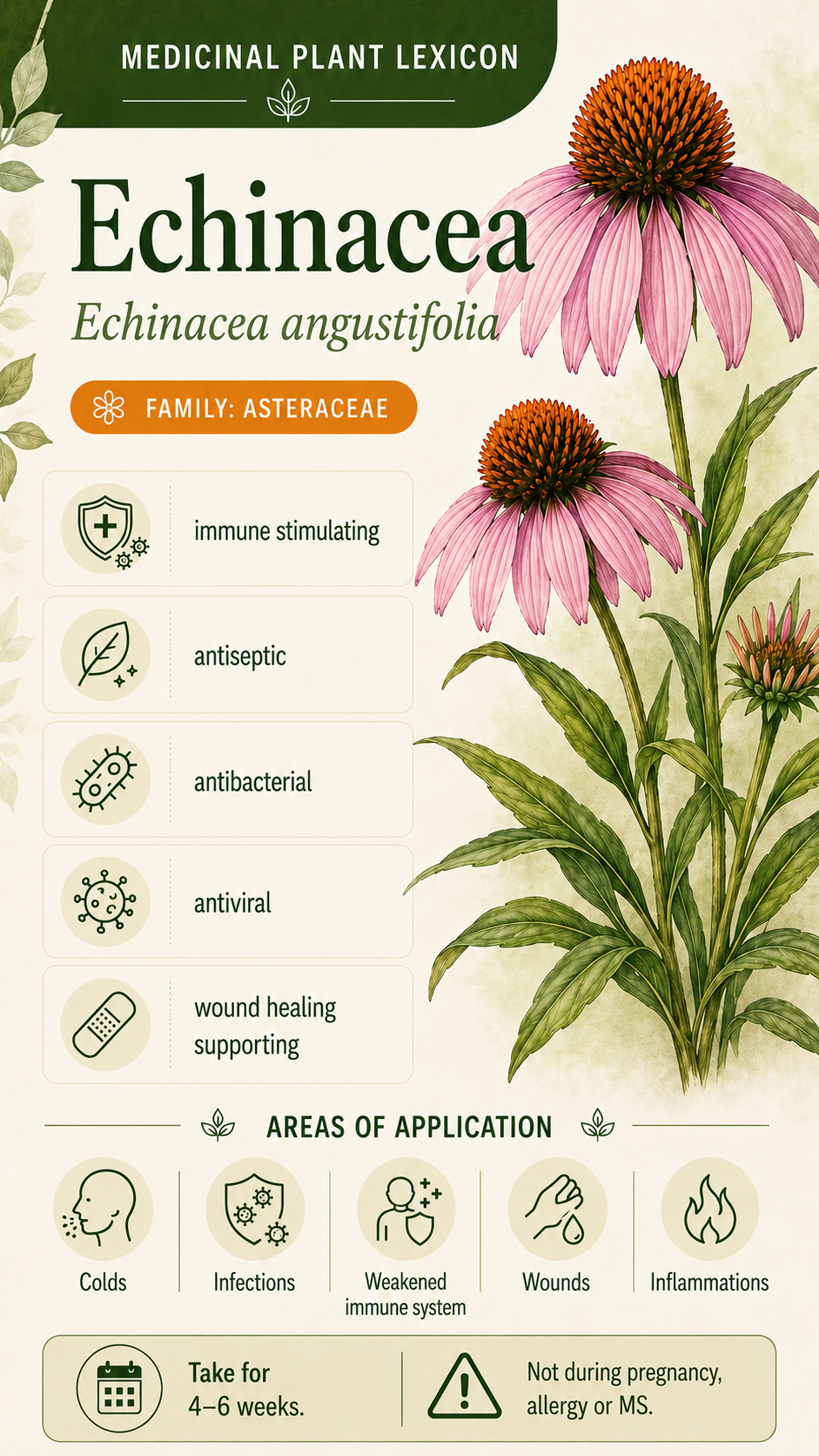
Features: Immunostimulant, antiseptic, fungicidal, antibacterial, antiviral, promotes wound healing.
Applications
The immune system is the key focus of Echinacea—all indications revolve around this topic.
Echinacea for Infectious Diseases
When it comes to infectious diseases, the immune system must respond quickly and effectively. Echinacea increases the number of immune cells (leukocytes) and boosts the release of inflammatory mediators. This leads to a more vigorous fight against the infection, resulting in a shorter and milder course of the illness. Clinical studies have shown a significant reduction in the duration of colds.
Echinacea for Immune Deficiency
A weakened immune system leaves you vulnerable to recurring infections, slow healing, and chronic fatigue. Taking echinacea tinctures as a course of treatment for 2–6 weeks provides lasting support for the immune system: white blood cell counts rise permanently, the activity of phagocytes increases, and the body is better equipped to fend off new attacks.
Echinacea angustifolia for the common cold
Echinacea has antiviral and antibacterial effects against cold viruses that affect the nose, throat, and bronchial tubes. Chicoric acid inhibits the spread of pathogens in the tissues, alkylamides activate phagocytes, and the increased white blood cell count enables a faster immune response. Cold episodes are shortened or—when taken prophylactically—prevented altogether.
Echinacea for Wounds
In infected or poorly healing wounds, pathogens spread into the surrounding tissue. Chicoric acid inhibits hyaluronidase—the enzyme that pathogens use to migrate through connective tissue. This stops the spread of the infection, allowing the body’s own immune system to fight the pathogens locally, and the wound heals.
Echinacea angustifolia for inflammation
In cases of infection-related inflammation—such as tonsillitis, bronchitis, or sinusitis—echinacea specifically activates the immune system to fight the pathogen. Important: Use only for infection-related inflammation—not for autoimmune conditions, as immune activation would be counterproductive in those cases.
Echinacea to boost the immune system
As a preventive measure before periods of high stress, during cold season, or after feeling exhausted: Taking echinacea as a short course of treatment for a maximum of 2–6 weeks provides long-lasting support for the immune system. After completing the course, take a break—then you can start the next one.
Instructions for Use
Maximum 4–6 weeks straight. Any longer than that is counterproductive: the immune system slows down, and the person becomes more vulnerable.
Pregnancy & Breastfeeding
According to studies, short-term oral use is safe—however, manufacturers advise against it. It is recommended to consult a doctor or alternative practitioner.
Contraindications
For allergies and asthma: May trigger allergic reactions—do not take. For autoimmune diseases and MS: strictly contraindicated. For high fever (39°C or higher): no further immune stimulation is necessary.
Plant Profile
- Scientific name: Echinacea angustifolia
- Plant family: Asteraceae
- Other names: Coneflower, Hedgehog Flower, Coneflower
- Flowering period: July through September
- Origin: North America
- Toxicity: Non-toxic