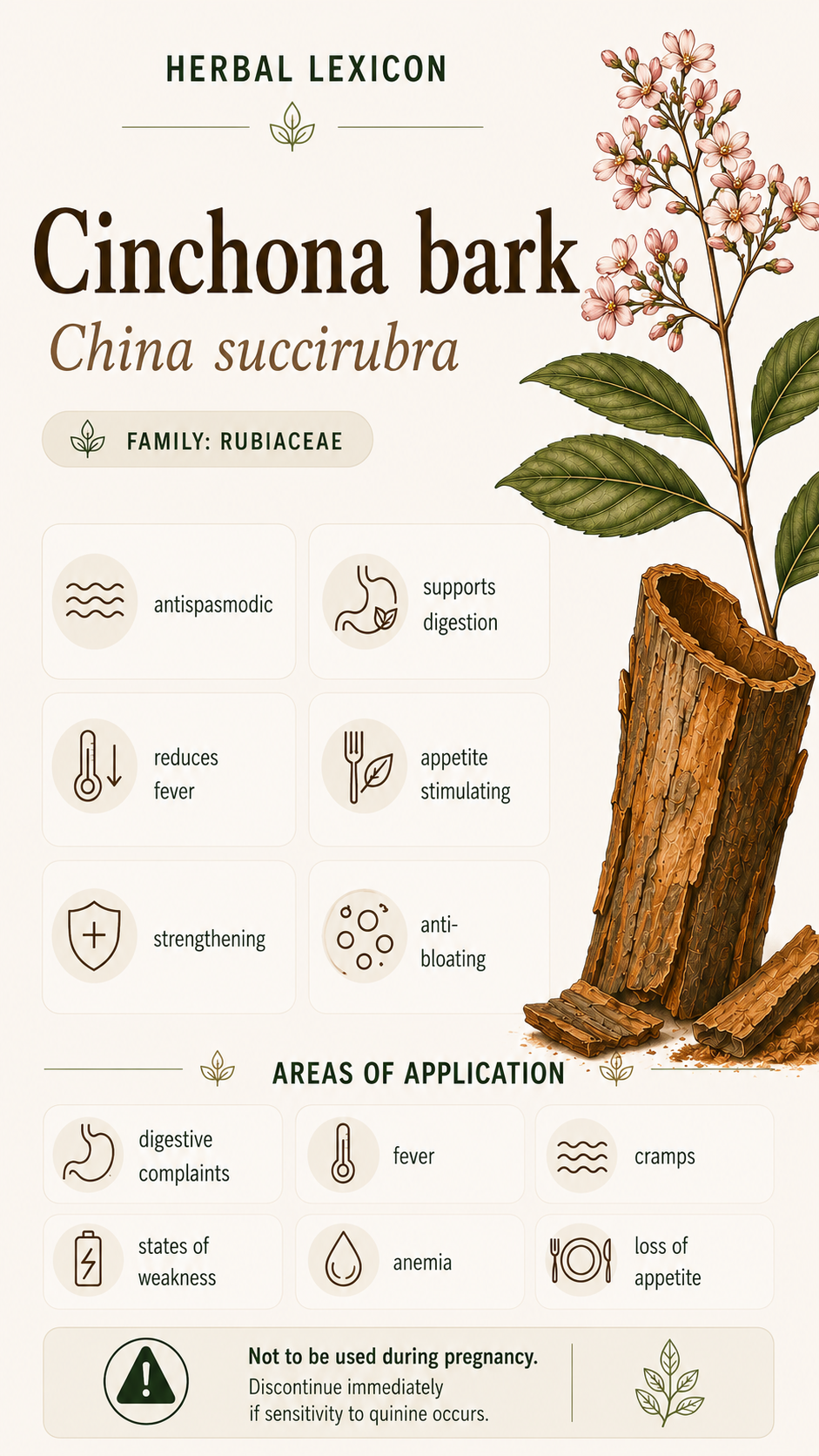

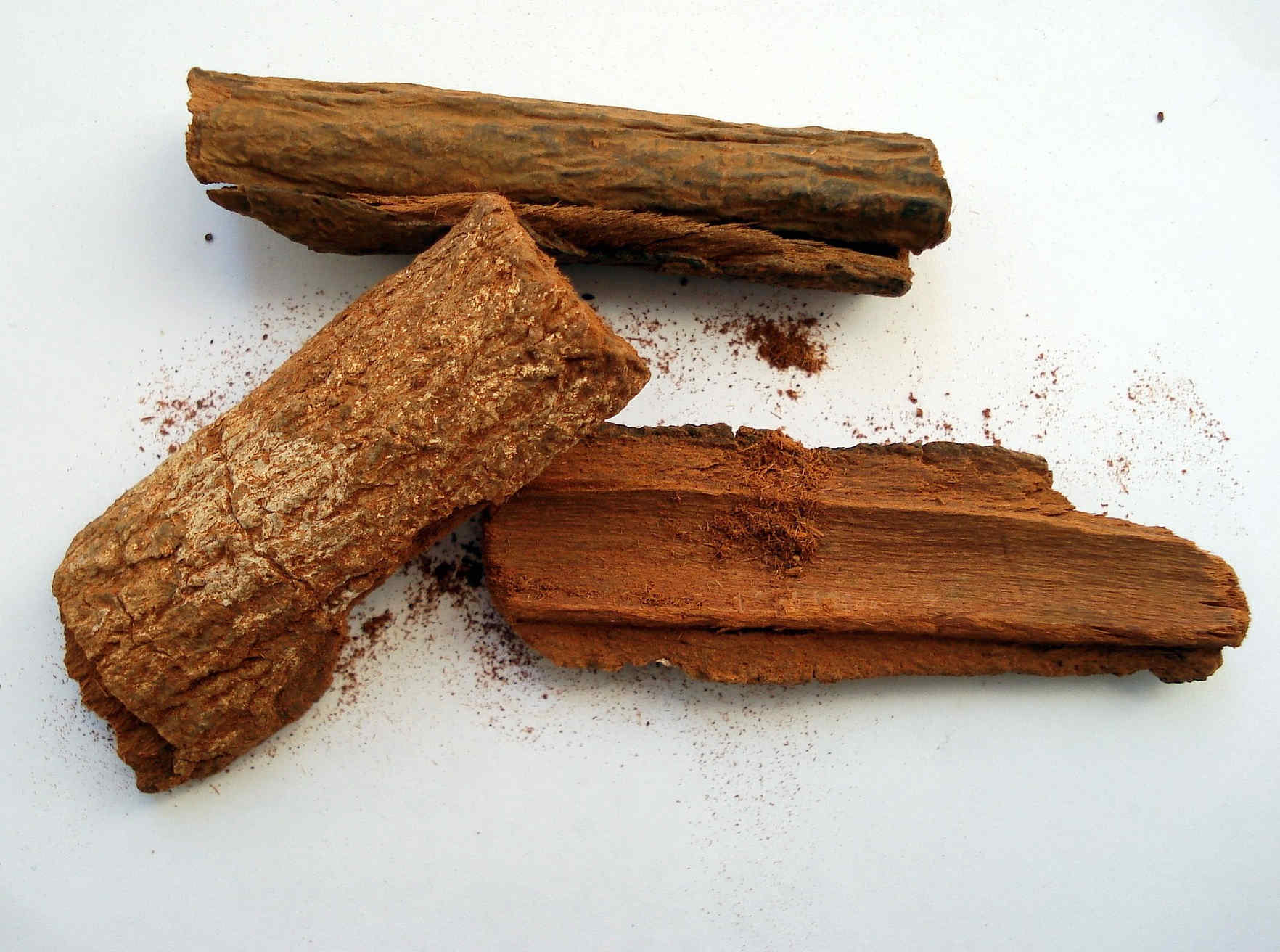
Cinchona bark—known as a 17th-century remedy for malaria—is now a proven remedy for indigestion, cramps, and fever.
Interesting facts about cinchona bark
From malaria to tonic water—cinchona bark has made history.
- It was the standard treatment for malaria—until synthetic alternatives became available.
- It grows so aggressively that it crowds out other trees.
- Tonic water owes its bitterness to the quinine found in cinchona bark (now produced synthetically).
Effects & Properties
The alkaloids Quinine and quinidine stimulate the digestive glands (liver, gallbladder, pancreas) to increase secretion while simultaneously relaxing the intestinal muscles. In the form of quinine sulfate, cinchona bark is the most effective remedy available for leg cramps. The bitter compounds improve nutrient absorption in the small intestine.
Features: relaxing, aids digestion, reduces fever, stimulates the appetite, invigorating.
Applications
A wide range of symptoms, from digestive issues to fever.
China succirubra for conditions of weakness
After serious illness, surgery, or prolonged exhaustion, the body is depleted—digestion, the liver, and the immune system are functioning at a reduced capacity. Cinchona bark has a strengthening and restorative effect: it stimulates the liver, aids digestion, and provides the weakened body with the energy it needs to regenerate. It is particularly valuable during convalescence.
Cinnamon Bark for Anemia
Anemia is often caused not by a simple iron deficiency, but by poor absorption of iron and vitamin B12 in the small intestine. The bitter compounds in cinchona bark improve the absorption of these essential nutrients by stimulating the production of digestive juices. Blood production improves, and the symptoms of anemia—fatigue, paleness, and weakness—subside.
China succirubra for digestive problems
Sluggish digestion, bloating, and cramps occur when the liver, gallbladder, and pancreas do not produce enough digestive juices. Cinchona bark specifically stimulates these glands through its alkaloids: bile production increases, the pancreas releases more enzymes, and the intestines are relieved of cramps. Digestion runs smoothly again.
Cinnamon bark for fever
For centuries, quinine was the most important fever-reducing agent in medicine. It directly influences the hypothalamus’s regulation of body temperature, thereby lowering it. At the same time, it strengthens the weakened body. Today, cinchona bark is a common ingredient in cold remedies and naturopathic fever treatments.
China succirubra for sleep problems
When cramps or digestive problems disrupt sleep, cinchona bark helps by relaxing the intestines and muscles. The physical restlessness that prevents sleep subsides. Its relaxing effect on the nervous system makes it easier to fall asleep.
Cinnamon Bark for Liver Diseases
The liver is the body’s primary detoxification organ—when it becomes diseased, its function declines. Cinchona bark stimulates bile production, relaxes the bile ducts, and prevents bile congestion. It supports liver function, improves the elimination of waste products, and enhances overall well-being.
China succirubra for loss of appetite
A loss of appetite occurs when the digestive glands produce insufficient secretions and the hunger signal fails to materialize. The bitter compounds in cinchona bark stimulate the digestive glands via taste receptors as soon as they enter the mouth—the feeling of hunger returns, and food intake improves.
Cinnamon Bark for Joint Pain
Quinine affects the release of bicarbonate in the body, which in turn indirectly influences the inflammatory cascade in the joints. For inflammatory joint conditions, cinchona bark has anti-inflammatory and pain-relieving effects. It has proven particularly effective as an ingredient in formulations for rheumatism and joint pain.
Instructions for Use
As a tea, ready-to-use preparation, or quinine sulfate specifically for treating cramps. Temporary apply.
Pregnancy & Breastfeeding
Do not take—the bitter compounds can cause complications.
Quinine sensitivity
If you experience dizziness or vomiting after taking this medication, stop taking it immediately.
Plant Profile
- Scientific name: China succirubra / Cinchona pubescens
- Plant family: Rubiaceae
- Other names: Red Cinchona Tree
- Flowering period: June through December
- Origin: South America
- Toxicity: Non-toxic