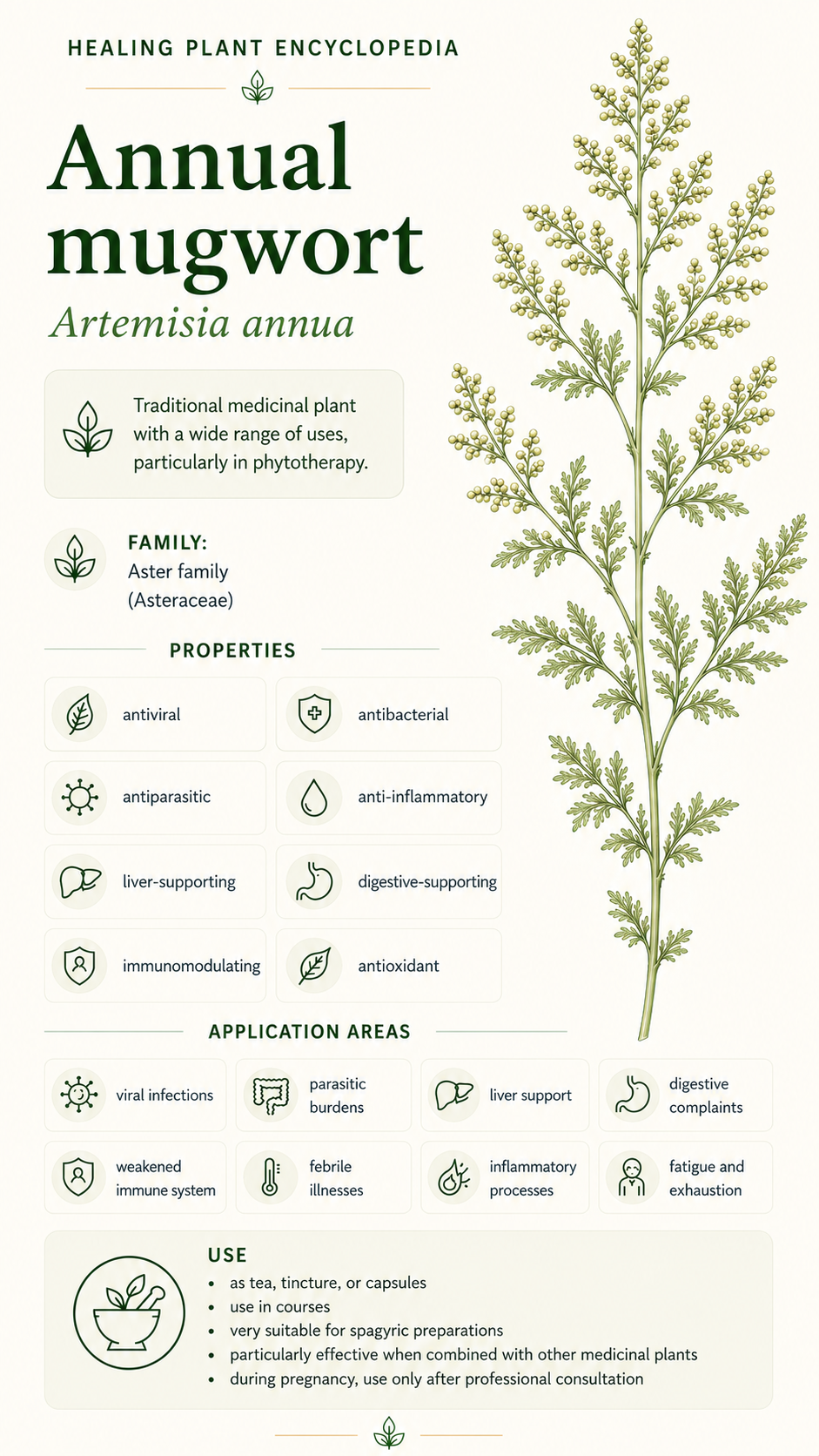

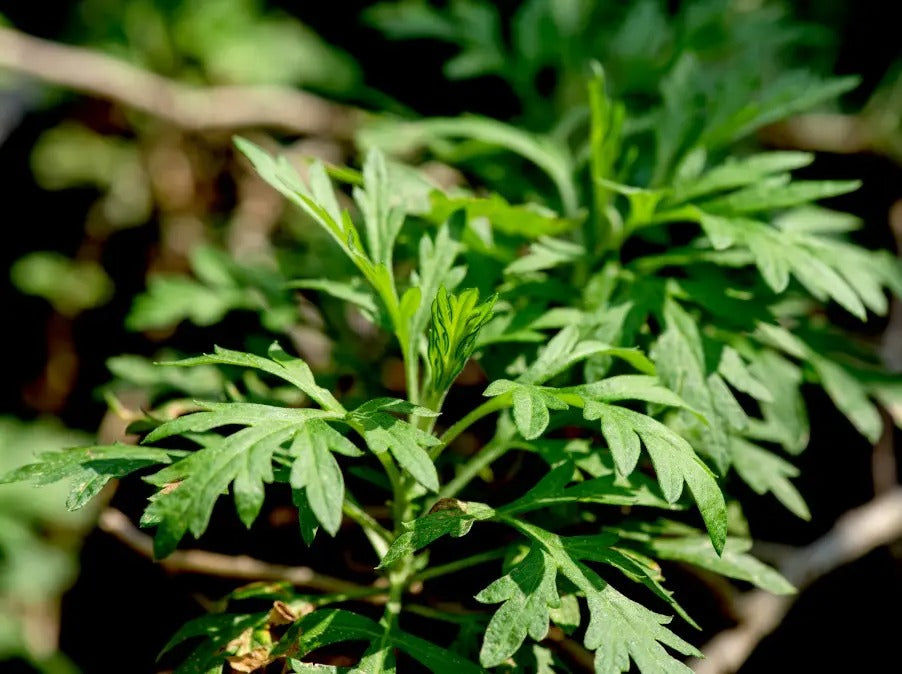
Annual mugwort is native to Asia, where it was revered as a powerful remedy. It was rediscovered there as a medicinal plant in the 1970s and is now considered highly significant. In our part of the world, mugwort has been used traditionally in medicine and cooking for centuries—fatty meats are seasoned with mugwort because it makes the fat easier to digest.
Interesting facts about annual mugwort
- Roast goose is traditionally seasoned with mugwort to make it easier to digest.
- Modern malaria drugs are based on the active ingredient artemisinin, which is derived from sweet wormwood—the scientist who discovered it was awarded the Nobel Prize in Medicine in 2015.
- Mugwort was grown along Roman roads because the legionnaires would put it in their shoes to treat sore feet.
Effects & Properties
Mugwort has a strong anti-inflammatory effect on the body. Its active ingredient Artemisinin reacts with iron in the body to produce free radicals that specifically target viral and parasitic cells. Thujone Soothes inflamed mucous membranes and has a pain-relieving effect. Phytohormones give it estrogen- and progestin-like effects. Active ingredients: essential oils (thujone, cineol, camphor), bitter compounds, coumarins, flavonoids, artemisinin.
Features: anti-inflammatory, stimulates blood circulation, astringent, antimicrobial, aids digestion, reduces fever.
Applications
Thanks to its complex blend of highly potent active ingredients, mugwort has a wide range of uses.
Artemisia annua for Herpes
After an initial infection, herpes viruses remain dormant in the nerve ganglia and reactivate when the immune system is weakened. Because mugwort has antimicrobial properties, it directly targets the viruses and helps the immune system contain the infection. It shortens the active phase of herpes and alleviates the associated pain and discomfort—for both cold sores and shingles.
Mugwort for Viral Illnesses
Artemisinin is particularly effective against viral infections: it reacts with iron in the viral cells, producing free radicals that destroy the viral structures from within. At the same time, mugwort supports the immune system by stimulating the body’s natural defenses. This shortens the duration of the infection and makes the course of the illness milder.
Artemisia annua for Acne
Acne is caused by inflammation and bacteria in the skin pores. When taken internally, mugwort stimulates the digestive glands, thereby reducing the burden on the skin as an excretory organ—fewer waste products need to be eliminated through the skin. When applied topically, it helps improve blood circulation in the skin, kill local pathogens, and soothe inflammation.
Mugwort for fungal infections
Fungal infections occur when the balance of the body’s natural microflora is disrupted and fungal spores multiply excessively. Mugwort has antifungal properties: its active ingredients restore the body’s natural balance, create an environment unfavorable to fungi, and directly attack fungal spores. It can be used both internally and topically.
Artemisia annua for menopausal symptoms
Mugwort contains phytohormones with estrogenic and progestogenic effects. These substances have antispasmodic and antiperspirant properties—two of the most common symptoms of menopause. Mugwort has proven particularly effective for hormonal-related psychological symptoms of menopause, as it also helps regulate the stress hormone cascade.
Mugwort for fever
A fever is the body’s response to an infection—mugwort supports this immune response in several ways. Artemisinin strengthens the immune system and directly targets pathogens. At the same time, mugwort has a fever-reducing effect that relieves the body and shortens the recovery period.
Artemisia annua for hemorrhoids
Many hemorrhoids are caused by an overburdened liver that cannot process the nutrient-rich blood from the portal vein quickly enough. Mugwort stimulates the digestive glands, helping the liver filter the blood more effectively. The congestion in the portal vein system subsides, and with it, the cause of the hemorrhoids.
Mugwort for Digestive Problems
Mugwort is known for its ability to aid in the digestion of fats. It stimulates the liver and pancreas to release more digestive juices. That is why it is used in traditional cuisine to season fatty roasts—mugwort makes roast goose more palatable and easier to digest.
Artemisia for Helicobacter pylori
The bacterium Helicobacter pylori can cause inflammation of the stomach lining and, over time, lead to stomach ulcers. Mugwort is effective against this pathogen: it has an antimicrobial effect on the bacterium, relieves pain through thujone, soothes the inflamed lining, and relaxes the tense stomach.
Instructions for Use
Mugwort can be used as a phytotherapeutic, spagyric, or homeopathic complex remedy. Generally, on a health retreat It is recommended to take it several times a day. Long-term use is not recommended.
Pregnancy & Breastfeeding
Mugwort should not be taken during pregnancy or while breastfeeding. Its active ingredients may have an abortifacient effect.
Allergy
Mugwort is quite allergenic. Patients with a history of allergies may experience hay fever in response to its pollen and skin irritation upon skin contact.
Plant Profile
- Scientific name: Artemisia annua
- Plant family: Asteraceae
- Other names: Qing-Guo, Chinese Wormwood, Annual Wormwood
- Flowering period: Starting in September
- Origin: China and Vietnam
- Toxicity: Non-toxic